
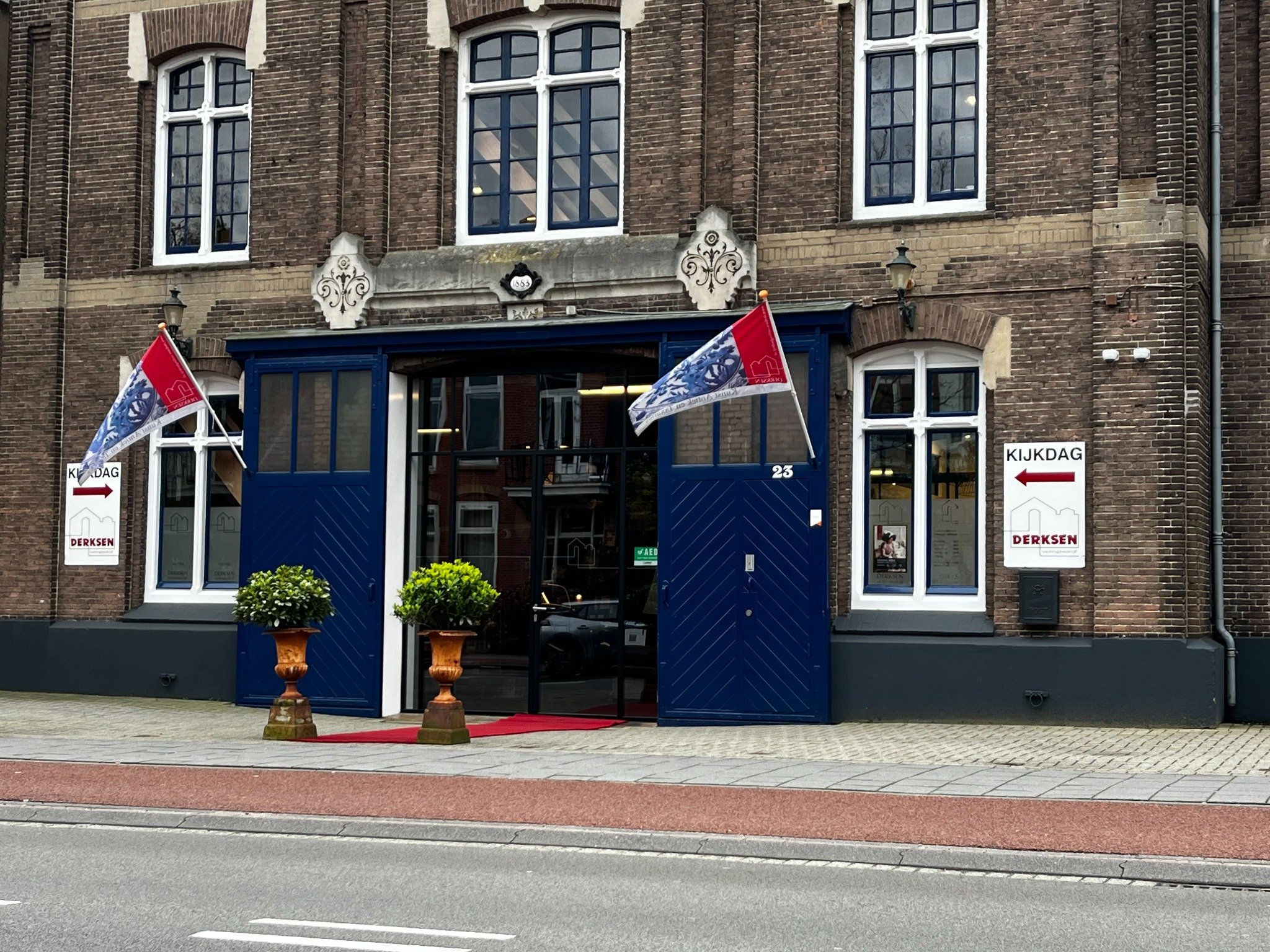
National Monument Valburg
The national monument “Valburg” was built as a tobacco warehouse in 1883. Most of the tobacco came from the Betuwe: Bemmel, Elst, and Valburg. The tobacco planter and trader Jan Hendrik de Hartog also hails from that town. In 1880, Jan Hendrik bought a house and plot of land from Hendrik Willem Fromberg, and in 1882, Hartog purchased a plot of land located behind the house already in his possession from the estate of the deceased Fromberg.
On this site, he had the tobacco warehouse built, the Veem, which was situated on the Amsterdamseweg, the important arterial road to Ede, Utrecht, and Amsterdam. Furthermore, the railway freight yard was a stone’s throw away. There was a direct train connection to Elst and thus also to Valburg. De Hartog had his new warehouse built in the neo-styles of the Renaissance and Gothic, a very popular architectural style in those years. A name for the warehouse was quickly found. It had to be the place where both the owner and the product came from: Valburg. The building served as a tobacco warehouse for only a short time.
The heyday of Dutch tobacco cultivation was actually already over around the turn of the century. At an auction in 1896, Johannes Floris Gerardus Meijer and Louis Willem Carel Meijer purchased the Arnhemsche Veem with the adjacent villa, yards, and garden land. Around 1920, the Arnhemsche Veem housed a storage facility for household effects and other goods. According to a lease agreement from July 1945, the Meijer sisters rented the property to the firm J C Derksen.
Eventually, Nicolaas Derksen purchased the warehouse and its appurtenances in 1977. Derksen Verhuisbedrijf experienced strong growth and established itself at the De Overmaat business park in Arnhem South in 1980. The auction company, founded in 1945, subsequently moved from the site where Praxis is now located to the Valburg warehouse. In 2000, the building was granted the status of “National Monument”.

